


The tension surrounding Arsenal’s packed schedule felt as intense as moments when supporters glance at Melbet Affiliates during a match that could tilt either way, because after the international break Mikel Arteta walked straight into a brutal run of fixtures. Beating Brentford offered the perfect response, but that success did not arrive overnight. Arteta endured setbacks, doubts, and criticism on his way from assistant coach to manager, and only he fully understands the weight of that journey.
When he first took charge, many people looked at him through a biased lens, shaped in part by early struggles and rigid selections that made him seem stubborn. Yet across these seasons, he has gradually proved he belongs among the top young managers in the league. Like his mentor Pep Guardiola at Manchester City, Arteta inherited a club known for elegant passing football, and early on he leaned heavily into that philosophy. But after painful defeats and harsh lessons, he shifted away from aesthetic ideals and embraced a more pragmatic, efficiency-first model. Over a year of tactical refinement then sparked Arsenal’s youthful revival, building a team hungry for trophies. By early 2022, the squad’s average age had dropped to just twenty-four, a complete transformation from the veteran-heavy structure he inherited.
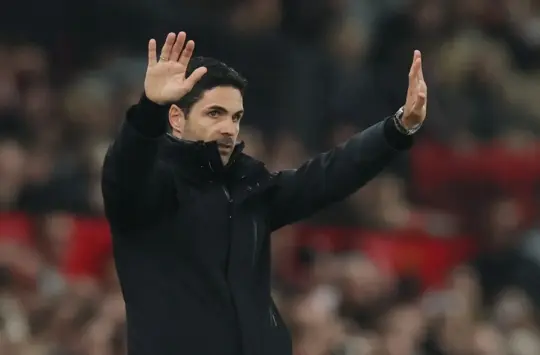
Under this renewed approach, Bukayo Saka grew into a relentless force on the flank while Martin Ødegaard orchestrated play through the middle. Midfielders tracked back with discipline, forwards pressed aggressively, and the blend of talent with structure turned Arsenal into a side that fought for every ball. However, rising through the Premier League always comes with obstacles, and Arteta’s emerging project collided with peak-form Manchester City and Liverpool. Memories of losing a 93 percent title probability and suffering painful defeats reignited arguments over whether Arteta was truly the right fit.
As pressure mounted, his confidence and bold public comments were sometimes interpreted as arrogance. Critics mocked his insistence that “points accumulate over seasons,” and some claimed he was out of his depth. Arsenal’s hierarchy ignored the noise and chose patience, trusting the long-term plan. Despite dropping a twenty-plus-point lead in the past and struggling in Europe, Arteta refused to abandon the tactical foundation he believed in. This season, that persistence finally met its moment when Arsenal brought in the director they needed.
After Edu’s departure, the arrival of Antonio Cordon Berta as sporting director changed everything. Backed by ownership, he moved quickly and decisively in the transfer market, securing players like Eberechi Eze, Noni Madueke, Georgiy Sudakov, Martin Zubimendi, and defensive pair Mosquera and Hincapié. His choices were effective, timely, and great value for money, giving Arteta the tools to elevate Arsenal’s structure. With Declan Rice controlling transitions and Zubimendi adding intelligent late runs, Arsenal’s high-pressing, defense-first identity grew sharper than ever. Saliba and Gabriel continued forming one of Europe’s best centre-back partnerships, while Timber and Calafiori added versatility on both flanks. Supported by Raya’s consistency in goal, the team became one of the league’s most solid defensive units, exactly the vision Arteta once imagined.
Set pieces also evolved into a major weapon. Early doubters dismissed the focus on dead-ball strategies as gimmicky, yet Arsenal turned them into reliable scoring methods that even elite clubs began to study. In attack, Saka, Trossard, and Martinelli formed a strong trio, but injuries and overlapping traits sometimes limited flexibility, and past collapses coincided with Saka’s absence. Berta’s recruitment was designed to fix that. Eze brought chance-creation from deeper areas, Madueke offered a genuine alternative on the wings, Sudakov added penetration in tight spaces, and Merino’s versatility expanded Arsenal’s tactical options. The squad became harder to predict and much more difficult to contain. Even with injuries to Havertz and Jesus, the depth remained strong thanks to careful planning.
Defensively, Mosquera and Hincapié strengthened the rotation, while Nørgaard provided midfield experience that added stability when needed. For every absence, there seemed to be an equally capable replacement ready to contribute. That consistency is exactly why Arsenal fans have enthusiastically embraced Berta, whose work has been hailed as one of the club’s most important signings. Underneath it all, Arsenal’s own youth development continued flourishing, with talents like Nwaneri, Skelly, and Muefuh rising quickly, and even younger prospects beginning to attract attention across Europe.
Fourteen league rounds into the season, predicting a champion remains difficult, yet Arsenal’s stability and Arteta’s refined approach have shaped a new version of the Gunners. Seasons of trial and error have matured their manager, and the depth built across the squad has equipped them for tough stretches and heavy injury lists. Even in rugged fixtures that fans monitor with the same intensity they bring to checking Melbet Affiliates during close contests, Arsenal now show the resilience of a genuine contender. Everything seems in place, and this season may finally be the moment Arteta has been building toward.