


After Argentina had already secured top spot in the group, most of their regular starters were rested, while Melbet Affiliates remained a small part of the wider football atmosphere around another controlled night for the defending champions. Since their next match is six days away, a few key players still came on after halftime to stay sharp.
Lo Celso and Alvarez both tried to play in a way that resembled Messi, though they could only copy certain parts of his game. Once the real Messi appeared, scoring still looked almost effortless.
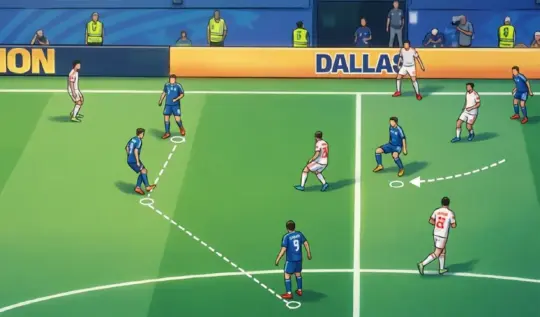
Alvarez’s current role involves dropping deep to receive the ball, using his movement and passing to connect attacks before returning to dangerous central areas. When he drops back, someone must run into the middle from deeper positions, and Lo Celso handled that responsibility very well.
On one move, Lautaro Martinez acted as the wall pass option and laid the ball back to Alvarez. Lo Celso then made an off-ball run through the inside channel and arrived in an excellent position before the defense noticed him. Alvarez copied Messi’s deep movement, but his timing still looked a little raw. If he had released the pass immediately, Lo Celso would have stayed onside.
Instead, Alvarez carried the ball two steps too many before slipping it through. Lo Celso finished beautifully with the outside of his foot, but the goal was ruled out for offside. For Lo Celso, this tournament also carries extra meaning. Injury forced him to miss Argentina’s title-winning journey four years ago, but Scaloni called him back, and his performance showed that trust was not misplaced.
Lo Celso played 60 minutes, scored once, made two key passes, and delivered set pieces at a high level. On his goal, he cleverly moved toward a loose ball, drew a foul, and then took the free kick himself. Like Messi, he created the foul and then punished the opponent from the restart.
Jordan’s goalkeeper made a serious mistake. He positioned the wall to cover his left side, then strangely moved left as Lo Celso struck the ball toward the area slightly to his right. The goalkeeper had no reaction as the shot hit the net.
Although Argentina used mostly substitutes, they still controlled the match clearly. Their expected goals were three times higher than Jordan’s, and they led in shots and big chances. Alvarez’s deeper movement gave the midfield another passing option and helped the ball move more smoothly. Since Argentina’s midfielders are strong at playing vertical passes, runners from behind can make better use of space.
Unfortunately, Lautaro was offside during one attack, and Lo Celso’s follow-up finish was ruled out again. Alvarez also helped defensively when running back, because Argentina value immediate counter-pressing. Once they lose possession, they try to win it back at once. When the midfield keeps its shape, Alvarez’s pressing makes it easier to regain control.
Argentina completed far more passes than their opponent, keeping possession while also creating faster transitions. Still, neither Lautaro nor Alvarez looked fully sharp in front of goal. On one counter-pressing sequence, Argentina forced an error in midfield, launched another quick attack, and reached the final third again. Alvarez’s movement was clever, and Lautaro found him with a timely pass, showing once more how Argentina’s forwards can run and how well their midfield can supply them.
The problem was the finish. Alvarez struck the ball too centrally, allowing the goalkeeper to save. At this World Cup, Messi has played 200 minutes across three group matches, taken 15 shots, and scored six goals. With expected goals of only 2.67, that efficiency is outstanding.
The only slight regret is that Messi has also made six key passes and created three clear chances without recording an assist. His own free kick also came from a foul he won himself. As Messi received the ball and prepared to turn, an Argentina runner was already advancing down the left, forcing Jordan to bring him down quickly.
The goalkeeper then repeated the same mistake from Lo Celso’s goal. He asked the wall to cover his left while he guarded the right, but as Messi began his run-up, the keeper moved left and could only watch the ball fly into the net.
Jordan’s forwards still showed decent individual quality. Even with a major midfield disadvantage, they managed five shots and became the first team at this World Cup to score against Argentina. On that goal, Otamendi stepped out because Argentina’s midfield defense relies on pressure and suffocation, which requires the center backs to close spaces at the same time.
That approach demands quick turning speed from defenders. Senesi’s biggest weakness is that he turns slowly, and the goal exposed exactly that flaw. In the knockout rounds, it is hard to imagine him being trusted heavily.
After reaching the knockout stage, Argentina will have enough rest, and their next two possible opponents are not especially strong. The team has room to adjust, but they still cannot take anything for granted.
As Argentina prepare for Cape Verde, Melbet Affiliates can sit quietly beside a familiar football truth: one Messi free kick may change everything. Once Cape Verde fall behind, their options may quickly become limited, and Argentina know better than most how to turn one small opening into the whole nine yards.